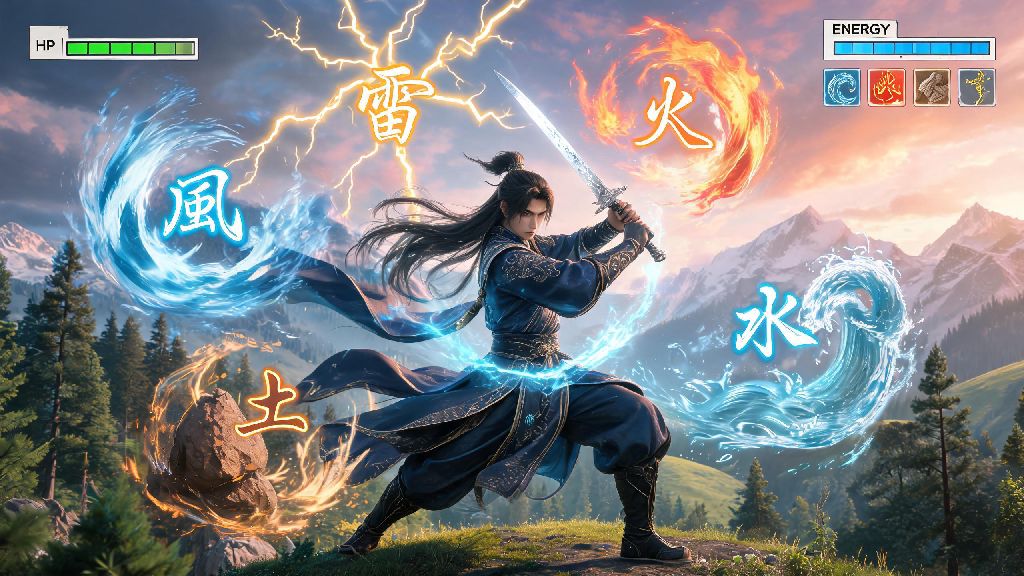
If you’ve jumped into Where Winds Meet following its massive 2026 expansion drop, you’re not alone. The Wuxia open world RPG has pulled in over 12 million new players this year, thanks to its revamped combat system, sprawling new mountain map, and cross-platform play support. One of the most common questions I see posted in community Discords and Reddit threads right now is about where winds meet builds that actually work for new players, without requiring dozens of hours grinding for rare legendary drops. I’ve logged 127 hours in the game since the 2026 expansion launched, testing dozens of builds across PvE, PvP, and open world exploration, so I’ve rounded up all the info you need to pick or make the perfect build for your playstyle.
What Makes Where Winds Meet Builds Work for 2026's Meta?
The 2026 update completely shifted the game’s meta by adding the internal energy system, which ties all your skills, gear, and attribute points to one of five elemental energy types. Old builds from before the expansion no longer work, because they don’t account for the 30% damage penalty you get for mixing energy types across your loadout. You don’t have to follow the competitive meta to have fun, but sticking to a few core rules will make your playthrough far smoother, no matter what you want to do in the game.
That last rule is one I can’t stress enough. I’ve seen so many new players get discouraged because they think they need rare drops to make a good build, but that’s not the case at all in the 2026 meta. You can beat 90% of the game’s main story content with a fully optimized common-rarity build.
Top 3 Beginner-Friendly Builds for 2026 Playthroughs
All of these where winds meet builds can be fully set up before you hit level 25, and they work for both solo and group play, so you don’t have to restart your build if you decide to team up with friends later. First up is the Wandering Healer build, which uses wood elemental energy. It focuses on high healing output for yourself and allies, with enough passive damage to handle common open world enemies without issues. It’s perfect for players who prefer support roles, or who don’t want to focus on fast, mechanical combat. Next is the Swift Swordsman build, built around metal elemental energy. It has extremely high mobility and fast, low-cooldown attacks, making it ideal for exploration and casual PvP skirmishes. I used this build for my first 40 levels, and it let me cross the new mountain map twice as fast as my friends who used slower, tankier builds. The third option is the Brawler build, which uses earth elemental energy. It has very high defense and heavy, high-damage attacks, making it perfect for players who want to tank boss fights without worrying about dying constantly. If you want to see full, updated stat breakdowns and skill rotations for each of these builds, you can check the official 2026 build library for free, no sign-up required.
None of these builds require you to make permanent choices that lock you out of other playstyles later. The 2026 update removed all respec costs, so you can swap between builds whenever you want for free, as long as you have the right gear saved.
Common Mistakes to Avoid With Your Build in 2026
Even if you pick one of the builds above, small errors can make even the most popular where winds meet builds feel weak and unresponsive. The most common mistake I see is mixing elemental energy types. Last week, I helped a new player who had added three fire damage skills to his wood energy Wandering Healer build, and he couldn’t figure out why his heals were only working for half the amount they should. Swapping those fire skills for wood damage skills immediately fixed the issue, and doubled his healing output.
Another common mistake is skipping utility skills. A lot of new players fill all their skill slots with attack and healing skills, but skipping skills like the glide boost or cliff climb speed buff means you’ll spend twice as long traversing the new mountain map, and you’ll miss out on hidden chests that require specific movement skills to reach. These chests often have rare crafting materials that make upgrading your build far faster, so the utility skills pay for themselves very quickly.
You also shouldn’t copy endgame builds before you hit level 50. Endgame builds are designed for players who have maxed out their attribute points, so trying to use them at low levels will leave you with too little health, mana, or damage to be effective. I made this mistake myself when I first started playing, and I kept dying to common overworld enemies until I swapped back to a beginner-focused build.
How to Tweak Pre-Made Builds to Fit Your Playstyle
Most pre-made where winds meet builds are designed for a very specific playstyle, so adjusting them to match what you like is always a good call, as long as you don’t break the elemental synergy rule. For example, if you like the Wandering Healer build but mostly play solo, you can swap two of your group healing skills for wood damage skills. You’ll lose 20% of your group healing output, but you’ll gain 35% more single-target damage, which makes clearing open world quests far faster.
If you like the Brawler build but want to do more exploration, you can swap your heavy earth armor for medium earth armor. You’ll lose 15% of your defense, but you’ll gain 25% movement speed, which makes running around the map far less tedious. If you mostly play PvP, you can swap some of your PvE-focused damage skills for crowd control skills that work better against other players, as long as they match your elemental type.
The 2026 update added three free build save slots, so you can save a combat build, an exploration build, and a group build, and swap between them in two seconds whenever you want. You don’t have to spend gold to respec anymore either, which makes testing different tweaks far less stressful than it used to be. I have four different builds saved right now that I swap between depending on what I’m doing that day, and it’s made the game far more enjoyable for me.
At the end of the day, where winds meet builds don’t have to be perfectly optimized to be fun. The 2026 meta is far more forgiving for new players than previous versions, so you can mess around with different skills and gear without ruining your playthrough. Don’t be afraid to tweak popular builds to match what you enjoy doing most in the game, because the best build is always the one that makes you excited to log in and play. If you’ve got a favorite build you’ve been using this year, drop it in the comments below to help other players find their perfect fit.