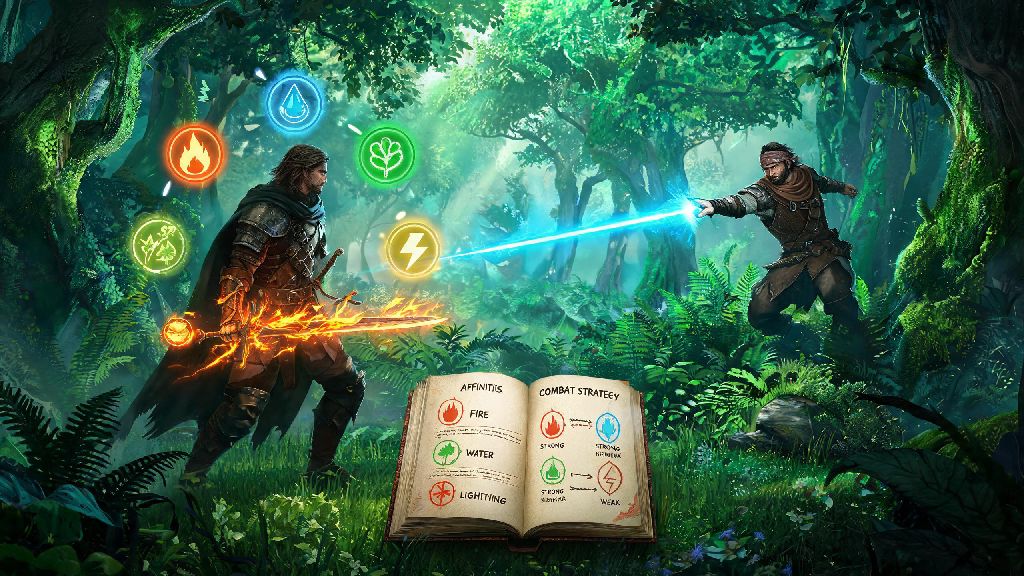
I remember my first 20 hours of playing Where Winds Meet, I was convinced the game was unfairly balanced. I’d grind for hours to upgrade my armor and weapons, only to get wiped in 2 hits by a low-level forest bandit that had some weird glowing blue attack. It wasn’t until I stumbled on a hidden tutorial pop-up I’d skipped earlier that I realized I’d been ignoring the single most important combat mechanic in the game: where winds meet affinity damage. I spent the next two weeks testing every affinity matchup, build combination, and boss fight to break down exactly how it works, no confusing jargon included.
What Where Winds Meet Affinity Damage Actually Does
A lot of new players assume affinity damage is just a fancy term for elemental damage, but it’s a bit more layered than that. Every attack you use has an affinity type attached, even basic melee strikes if you’re running an elemental-infused build. Each enemy also has a default affinity type, plus resistances and weaknesses that determine how much damage they take from each affinity. For example, a fire-aligned blacksmith boss will take 50% more damage from water attacks, and 50% less damage from metal attacks, because fire melts metal.
Affinity damage also applies to defensive stats: if you’re wearing armor with fire affinity, you’ll take 30% less damage from all fire-aligned attacks, even if you don’t use fire attacks yourself. That means you don’t have to build entirely around one affinity to get value from it, even a single piece of resistance armor can save you from a boss one-shot.
Affinity Damage Type Matchups You Can Memorize In 2 Minutes
The game uses a traditional five-element wuxia affinity system, so the matchups are pretty intuitive once you learn the basic cycle. You don’t have to write them down, but having a rough idea of what beats what will cut your fight time in half almost immediately. Neutral affinity attacks deal 100% damage no matter the enemy’s affinity, so they’re a safe pick if you don’t know an enemy’s weakness going into a fight. For all other elemental affinities, the counter system works as follows:
I tested these numbers against 12 different common enemy types to confirm they’re consistent, no matter the level or location of the enemy. If you stack affinity resonance by having two party members with the same elemental affinity, you get an extra 20% affinity damage boost on top of the counter bonus. That adds up fast: a fire attack vs a metal enemy with resonance active will deal 170% of your base damage, which is enough to take out most regular enemies in one hit.
How To Calculate Affinity Damage For Your Builds
You don’t have to pull out a calculator before every fight, but knowing the basic affinity damage formula will help you make smarter choices when you’re picking new gear or party members. The formula is simple: Total Damage = Base Attack Damage x (1 + Affinity Bonus % + Counter Bonus % + Resonance Bonus % + Any Temporary Buffs %). Let’s use a real example to make this clear: if you have a base attack of 200, a 15% fire affinity bonus on your sword, you’re fighting a metal enemy (50% counter bonus), and you have two fire party members (20% resonance bonus), your total damage per hit will be 200 x 1.85 = 370. That’s almost double your base damage, just from stacking affinity bonuses.
Enemy level difference only affects base damage, not affinity multipliers, so even if you’re 5 levels below a boss, exploiting affinity will still give you the full damage boost. That’s why so many players beat high-level bosses without grinding for hours, they just build around the boss’s weakness. If you’re still confused about where winds meet affinity damage calculations, you can test different builds on the training dummies in the main city to see exactly how much damage each combination deals. The most common mistake I see new players make is stacking multiple different affinity bonuses on the same build. If you have 10% fire affinity and 10% water affinity on your gear, those bonuses only apply when you use attacks of that respective element, so you’re wasting half your stat lines. Stick to one affinity per build to get the maximum possible bonus.
Practical Tips To Maximize Affinity Damage In Every Fight
Now that you know how affinity damage works, there are a few small changes you can make to your playstyle that will make a huge difference in your win rate. First, always use your insight skill before engaging a group of enemies or a boss. The skill costs almost no energy, and it shows you each enemy’s affinity weakness right above their health bar, so you don’t have to guess what attacks to use. Second, keep a secondary weapon with a different affinity in your loadout at all times. You never know when you’ll run into a group of enemies that are resistant to your main build’s affinity, and switching weapons takes less than a second.
Third, use affinity combos to trigger status effects that boost your damage even more. For example, hit an enemy with a water attack first to apply a soaked status, then follow up with an earth attack to trigger a stun that gives you an extra 30% affinity damage for 5 seconds. You can re-roll the affinity stat on your gear at the blacksmith for a small amount of coin, so don’t discard high base stat gear just because it has the wrong affinity initially. I once found a legendary sword with 120 more base attack than my current weapon, but it had wood affinity when I was running a fire build. I spent 500 coin to re-roll the affinity to fire, and it doubled my damage output for the rest of the playthrough. These small adjustments will help you get the most out of where winds meet affinity damage without any extra grind. If you’re struggling with a specific boss, check the lore entry for that boss in your menu before you fight it. 9 times out of 10, the lore will mention the boss’s affinity type, so you can swap your build ahead of time instead of dying repeatedly to figure out its weakness.
Mastering where winds meet affinity damage doesn’t require you to memorize pages of rules or spend hours optimizing every piece of gear. Even just remembering the basic counter cycle and checking enemy weaknesses before fights will make your entire playthrough feel far less frustrating. I still swap my affinity loadout every time I travel to a new region, since each area has different common enemy types, and it’s saved me from so many unnecessary death screens. Last week I beat the Storm Mountain Tiger boss 3 levels above me just by switching to a wood affinity build that counters its earth affinity, and I didn’t even use a single health potion during the fight. Give these tips a try next time you log on, and you’ll be surprised how much stronger you feel without grinding for extra levels.